

It was the first of May, 2025, and the console industry was shaken with an unprecedented announcement: Microsoft’s five year old Xbox Series X and S would be getting a price increase.
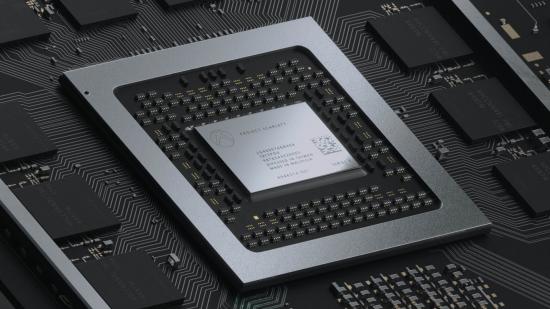
The shock and backlash from the market was immediate. It wasn’t just that this flew in the face of console market tradition, it’s that it flew in the face of historic technology trends. The famous Moore’s Law might not have held as much merit as it once did, but the expectation was still there: Technology would always get cheaper to produce over time. Consumers were long accustomed to getting the same performance and capabilities for less money, or better performance and capabilities for the same money as years went on. Suddenly, this bedrock of the tech industry was starting to show cracks.
At the time, Microsoft justified the price increases with “market conditions” and “cost of development”. Some of this could be fairly blamed on sweeping US tariffs levied on foreign countries, many like Taiwan and South Korea that were relied upon for much of the modern world’s chip production. Consumer demand was also insatiable. Just a few months prior, AMD and NVIDIA launched their next generation of GPUs for the PC gaming market, and few were lucky enough to get their hands on one before they were snatched away by other hungry enthusiasts, or more likely scalpers employing their devious bots.
But many blamed the price increases on Microsoft specifically, and their questionable management of the Xbox division. Shouldering the billions in debt acquiring ZeniMax Media and Activision Blizzard a few years earlier, and shifting away from console exclusivity in favor of increased software sales, it came as no surprise when in June of that year they reported a 25% drop in hardware sales year-over-year. With volume falling, absorbing a major financial loss on each console sold wouldn’t be viable if the Xbox division was to remain solvent.
But there was a bigger problem looming, one not strictly of Microsoft’s making. Despite major expansions in chip production, such as the opening of a large TSMC facility in Arizona that year, a major chip shortage was increasingly affecting all areas of the computing industry. By December of 2025 it came to a head, as huge demand would see the cost of RAM and storage suddenly surging to up to four times the cost just a few months prior. The cause was obvious to anyone remotely paying attention: AI was taking over.
The AI industry had been exploding over the past few years. According to Stanford University, investments totaled over $252 billion in 2024. In 2025, that number more than doubled to $581.7 billion. And this trend is expected to continue, with the World Economic Forum estimating the five largest AI companies are due to invest up to $690 billion alone in 2026.
The writing was on the wall. In October, Microsoft announced further increases in price from $80-100, and soon Sony and Nintendo would follow their lead. In March 2026, Sony announced a price increase on the PS5 and its variants of between $100 to $150. In May Nintendo announced the Switch 2 would increase in price by $50 in September. The decisions were unavoidable, but painful given likely impacts to unit sales, and outcry from consumers.
And those impacts are already bearing out. Xbox sales continued to decline, and in May this year they reported their worst sales in the history of the brand, with a 12 percent drop YOY. PlayStation’s sales that same month were the worst since 2000, suffering a much greater drop of 43%.
Consoles weren’t the only industry affected, and while personal computer sales grew slightly in the first quarter of 2026 by 2.5%, the IDC has predicted shipments to fall overall this year by 11%, with Q4 alone expected to drop 20% YOY. The culprit they cite? Memory shortages, of course.
Memory suppliers are in no hurry to remedy the situation. High costs mean high margins, and Micron alone brought in over $41 billion in revenue in their FQ3 earnings, an increase of over 345% YOY. The AI market has been so lucrative for Micron, in fact, that they announced in December of last year that they were exiting the consumer market entirely, at the height of the DRAM shortage. The company predicted that shortage would continue through until at least 2028, and to ensure their prices remain high throughout that period and beyond, they signed 16 strategic customer agreements, ensuring a minimum price per contract with their customers for the next four to five years.
While Micron has announced a $100 billion “megafab” in New York, plans for expansion take years, and in the short term other companies like Samsung don’t expect their DRAM production to rise more than 5% this year. This is forcing companies like Apple to raise the price of their computers, and turn to a new Chinese memory start-up CXMT out of desperation, despite hurdles from US sanctions.
Chinese memory companies like CXMT and YMTC might be seen as a temporary salve for the memory drought, but this won’t resolve the issue entirely. And memory production isn’t the only computer component expected to experience a squeeze, with the closing of the Strait of Hormuz earlier this year constraining critical elements needed for chip production, like ultra-high-purity helium gas, and bromine, the former of which sees 62% of its supply from Qatar. While companies like Samsung and SK Hynix have tried to diversify their supply sources, any disruption of helium means massive implications for the production of their 2 and 3nm chips.
All that is to say that as components dry up, and much of that constrained supply is sopped up by the AI goldrush, consumers may soon be priced out of most of the computing industry. While Pew Research found that median wages have outpaced inflation over the past ten years, that takes a dramatic turn when focusing on just the last five years when the AI boom took off, where wages effectively fell relative to CPI. Consumers are starting to see their buying power shrink, and with inflation rising in recent months, that will mean less available funds for high-priced luxury items like high performance PCs and gaming consoles.
While demand continues to rise nonetheless, this doesn’t bode well for future generations of game consoles. With the current cost of the upcoming PS6 rumored to be nearly $1,000, being able to afford a gaming console in the future could come into question for most average folks. The sales pitch gets further complicated as improvements in graphical fidelity generation-to-generation see diminishing returns. Technologies such as path-tracing and machine learning enhancements are being leaned on to drive improvements in lighting and character rendering, but such advancements may not be readily apparent to the average player, and the days of dramatic and obvious leaps in realism are now largely relegated to the gaming history books.
Current increases in demand may not even last. Reports that younger players (Gen-Z and Gen-Alpha) are not buying, and are not interested in the console upgrade cycle, are only compounded by the falling sales for key AAA games from companies like Ubisoft, while sales for low-tech indie games like Among Us, R.E.P.O., Schedule I, and the more recent Meccha Chameleon have exploded. These are games that can run on virtually anything equipped with a modern OS, at a time when the only affordable graphics cards for young people of limited income are starved for VRAM.
GPU makers like NVIDIA and AMD have sought to relieve VRAM limitations by making modern graphics less taxing. By using AI upscaling technologies, the very thing that caused the shortage of memory is being used to lessen the need for it, by rendering only a fraction of the pixels on the screen and filling in the rest with machine learning. Framerates can also be bolstered in a similar manner, with frame generation similarly filling in the gaps between real rendered frames, though with a hit to clarity and input latency. Those technologies are a band-aid solution with limited use, though, and while they might make some cheaper hardware more usable, very often it’s been used to sell lower-specced hardware for higher prices, exasperating the problem.
This in turn has given rise to the popularity of up-cycling. Older computers, even those that don’t technically support the latest Windows, are being dusted off and resold, with one company even repackaging old CPUs and GPUs in a shiny new compact case, and selling them for prices modern hardware can’t touch. Less scrupulous companies based in China, like CHUWI, are selling bargain laptops advertised as using relatively modern CPUs, only to be later found using older CPUs that they’ve hacked the BIOS to report as a newer generation part.
Still, there’s always the used market, which has led to marketplaces like Jawa that specialize in retired gaming PCs that users can list on the site, combined with a performance rating generated by Jawa. Companies like RePC, Free Geek, and the Kramden Institute will also take old computers, refurbish them, and sell them to those that can’t afford or don’t need expensive modern PCs. Retired office PCs are also a popular choice, as businesses change out computers in bulk, some lucky folks often get a chance to pick them up for a bargain, and slap in a GPU upgrade to turn them into entry-level gaming computers.
There’s even the continued rise in popularity of the retro PC community, whose enthusiasm is driven by several factors such as a growing anti-AI sentiment, fears surrounding digital goods ownership, and nostalgia for the “good old days” of rapid hardware advances, physical big box games, and distraction-free computing.
The net result is that as technology improves much more slowly, while continuing to rise in price, current industry stagnation will effectively give rise to a retraction in computing power. Affordability becomes the driving factor for consumers, not the flashy spectacle of the latest-and-greatest. With an eventual collapse in AI still being uncertain, it’s expected that sales of new hardware will fall as consumers are priced out, and the demand for upgrades fades with future generations of users. The median computing power of the mainstream market may see a slide backwards, if only slightly, as a cash-strapped population reaches not for the computers being made, but the computers they can buy.

No comments:
Post a Comment